

Founders shopping for an AI SaaS boilerplate usually say they want to launch faster.
That is true, but incomplete.
What they really want is to skip the parts of product setup that slow down momentum:
- auth,
- payments,
- database setup,
- deployment plumbing,
- and repetitive product scaffolding.
The problem is that not all launch tools solve that bottleneck in the same way.
This guide compares four tools from IndieAI’s current directory that belong in the same startup-build decision set:
They all help founders move faster, but they differ in how much code, flexibility, and abstraction they expect.
What Actually Matters in a Startup Build Tool
The right question is not “Which one has the most features?”
The better question is:
- do you want a starter codebase,
- a rich SaaS framework,
- or a prompt-driven app builder?
That changes everything.
Some founders want maximum control with a strong Next.js starting point. Others want as many built-in SaaS features as possible. Others care more about speed-to-prototype than traditional engineering setup.
1. ShipFast for Fast Launches With a Proven Boilerplate
ShipFast is the clearest fit for founders who want a proven startup boilerplate and care about speed with familiar web app patterns.
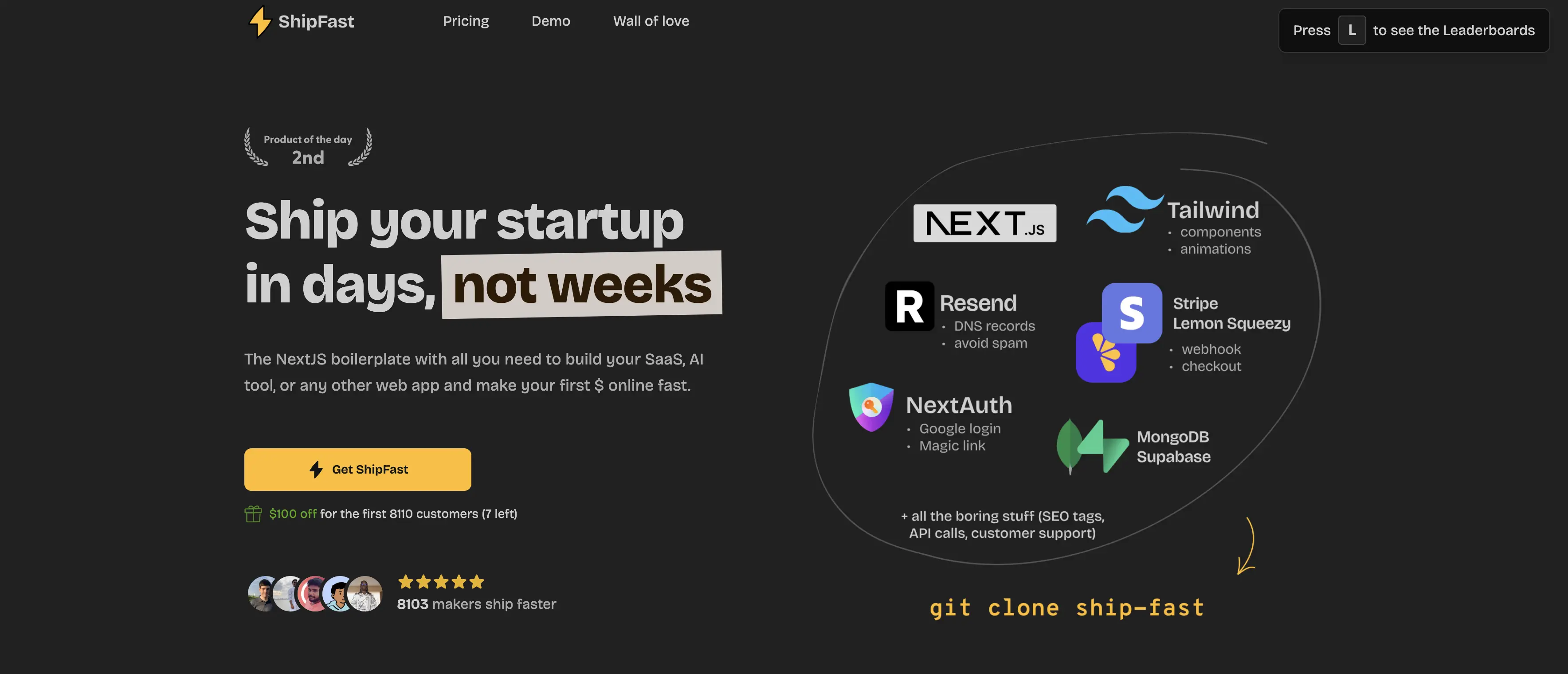
Its value is straightforward:
- auth,
- payments,
- database setup,
- blog / SEO support,
- and production-friendly starting structure.
That makes it especially strong for indie founders who want to move quickly but still remain close to a conventional Next.js workflow.
If your question is “What helps me launch an AI SaaS faster without reinventing every setup step?” ShipFast is one of the strongest options here.
Best for
- Founders launching a conventional AI SaaS quickly
- Builders who want a proven Next.js starting point
- Indie makers who still want direct control over the app
Strengths
- Balanced mix of speed, familiarity, and launch-ready structure
- Strong fit for common auth, billing, and blog needs
- Easier to adopt if you already understand standard web app workflows
Not ideal for
- Buyers wanting the richest built-in feature surface
- Users who prefer prompt-led app generation over a boilerplate
2. ShipAny for Framework-Style AI SaaS Launches
ShipAny sits close to ShipFast, but with a slightly different feel.
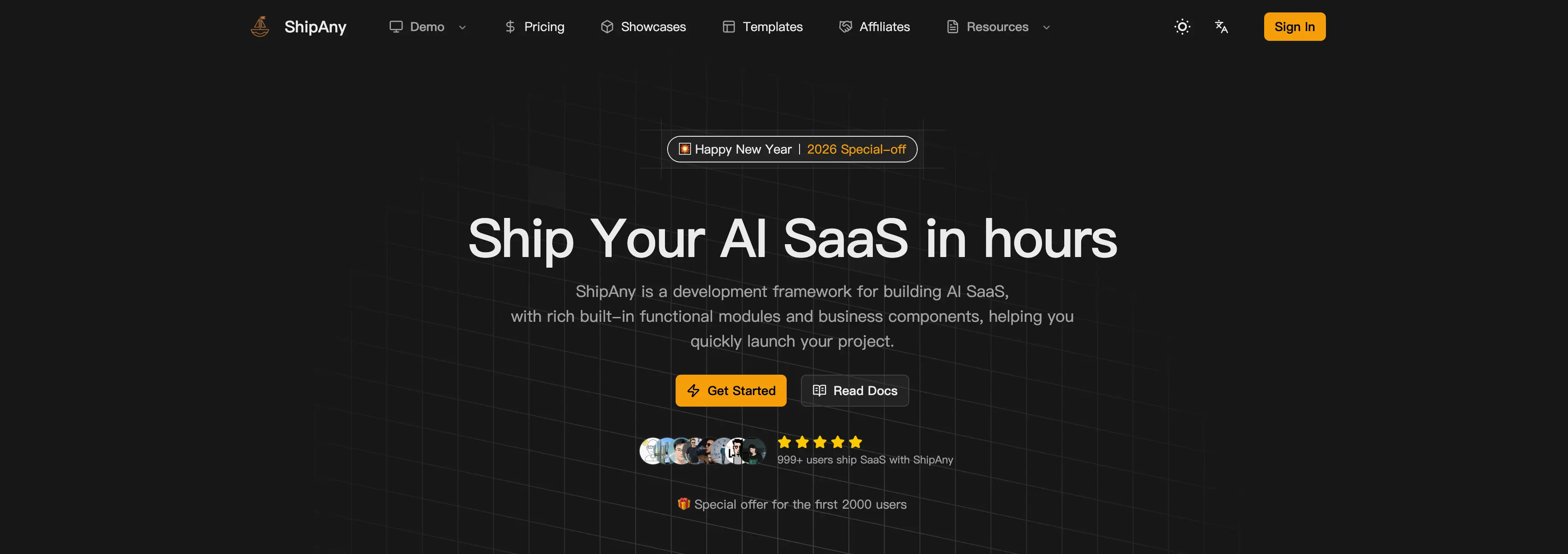
It is a better fit when you want an AI SaaS-oriented framework with richer built-in modules and a faster path to assembling production features. It is still a launch tool, but it leans more toward a structured system than a bare starter kit.
For some founders, that is a good trade:
- less setup work,
- more built-in capability,
- but also a somewhat stronger opinion about how the product should be assembled.
Best for
- Founders who want an AI SaaS-oriented launch framework
- Teams comfortable with a more opinionated setup
- Builders who value built-in modules over maximum flexibility
Strengths
- Faster path to assembling product features
- More framework-like than a minimal starter kit
- Useful when you want structure rather than only scaffolding
Not ideal for
- Founders who want a very lightweight baseline
- Teams that care most about staying close to a conventional barebones starter
3. MkSaaS for Feature-Rich Product Foundations
MkSaaS is the strongest option in this group for founders who want a more feature-heavy baseline out of the box.

Its appeal is depth:
- payments,
- auth,
- docs,
- i18n,
- blog,
- UI stack,
- and more.
That can be a major advantage for builders who want to compress setup across many SaaS concerns at once.
The tradeoff is that a richer foundation can also mean more surface area to understand. It is best for founders who want breadth and are comfortable navigating a fuller product skeleton.
Best for
- Founders who want many SaaS building blocks included up front
- Teams that value docs, i18n, UI, and product breadth
- Builders willing to trade simplicity for a richer base
Strengths
- Richest built-in feature surface in this comparison
- Good fit when many common SaaS concerns need to be solved at once
- Helps compress setup across a wider product scope
Not ideal for
- Builders who want the smallest possible starter
- Users who prefer a simpler path with less system surface area
4. Capacity for Prompt-Led App Building
Capacity is the outlier in this comparison, and that is exactly why it belongs here.
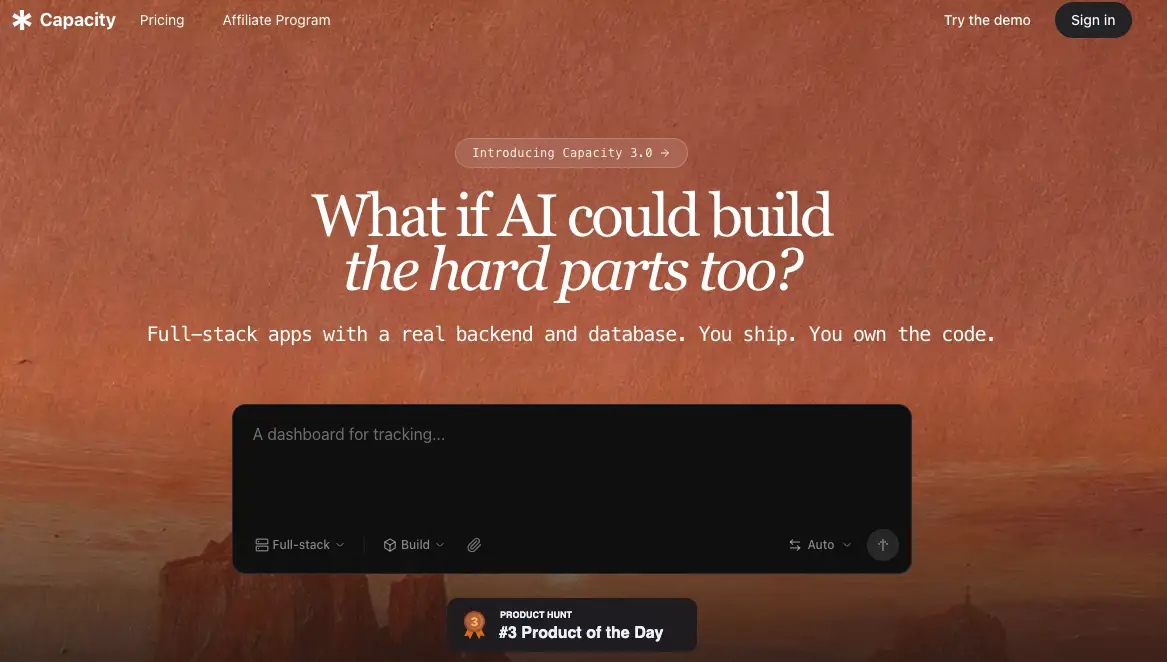
It is closer to an AI app builder than to a traditional SaaS boilerplate. That makes it especially relevant for founders who care about:
- speed to prototype,
- prompt-driven product assembly,
- and getting a working full-stack app off the ground faster.
If your priority is not “give me a reusable startup codebase” but rather “help me generate and deploy an app quickly,” Capacity can be more compelling than a conventional boilerplate.
Best for
- Founders prioritizing speed to prototype
- Builders open to prompt-led app creation
- Teams that want faster full-stack generation over classic scaffolding
Strengths
- Most different from a traditional boilerplate
- Better fit for prompt-driven building workflows
- Useful when fast prototyping matters more than starter-code familiarity
Not ideal for
- Founders explicitly shopping for a classic SaaS boilerplate
- Teams that want maximum control from a conventional codebase from day one
Which Tool Should You Pick?
Use this split:
- Choose ShipFast if you want a proven Next.js startup boilerplate with strong launch fundamentals.
- Choose ShipAny if you want a more framework-like AI SaaS launch system.
- Choose MkSaaS if you want the richest built-in feature base.
- Choose Capacity if you want a more prompt-led app-building workflow.
For most founders shipping a conventional AI SaaS product, ShipFast is the strongest default recommendation because it balances launch speed, familiarity, and production relevance well.